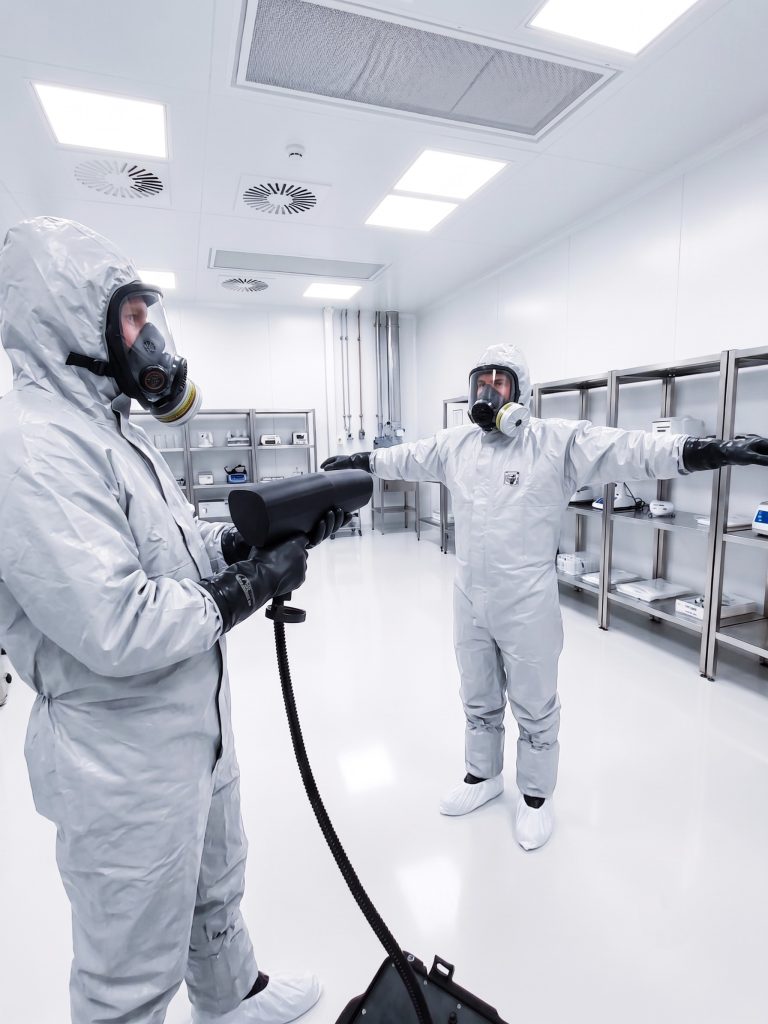
REDEFINING THE STANDARDS OF CBRN PROTECTION
A new generation of decontamination using patented DCSBD plasma technology.
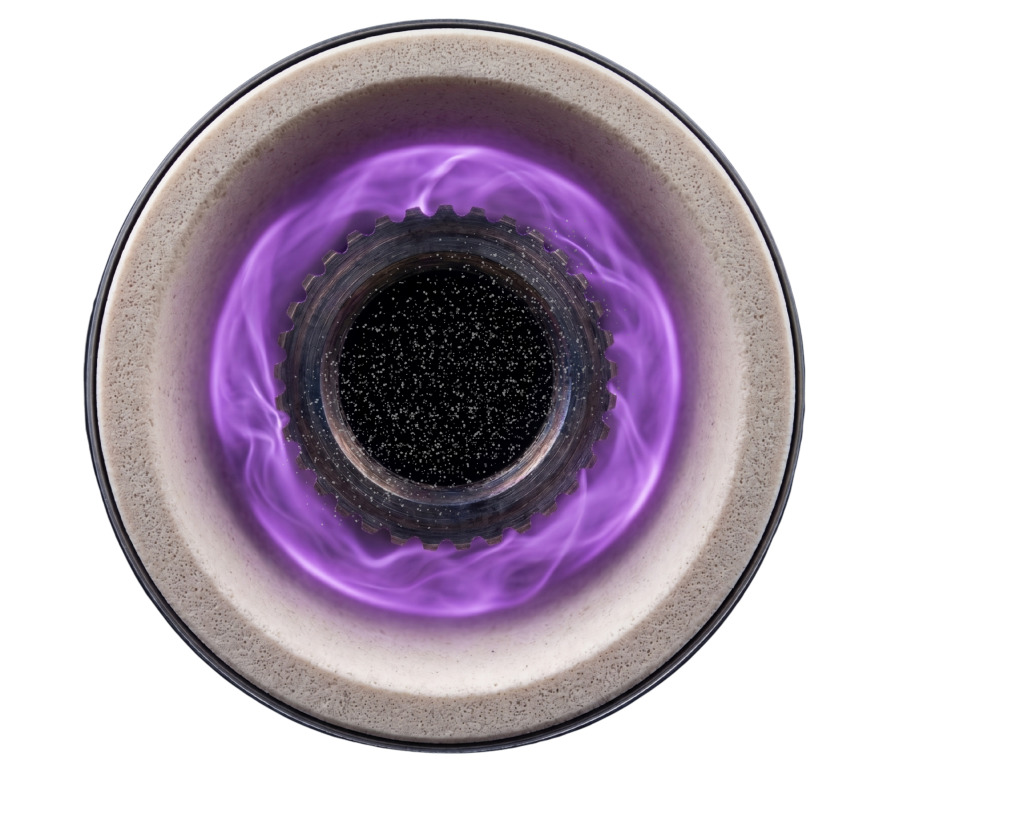
PLASMA — THE FOURTH STATE OF MATTER
Partially or fully ionized gas

Quasi-neutrality
Number of positive and negative charges is approximately the same.

Particle density
Depends on temperature and pressure-particles shade each other (Debye length).

High reactivity
Ions react readily with other ions and neutral molecules in the environment.

Hot or cold
Plasma can exist in either thermal regime
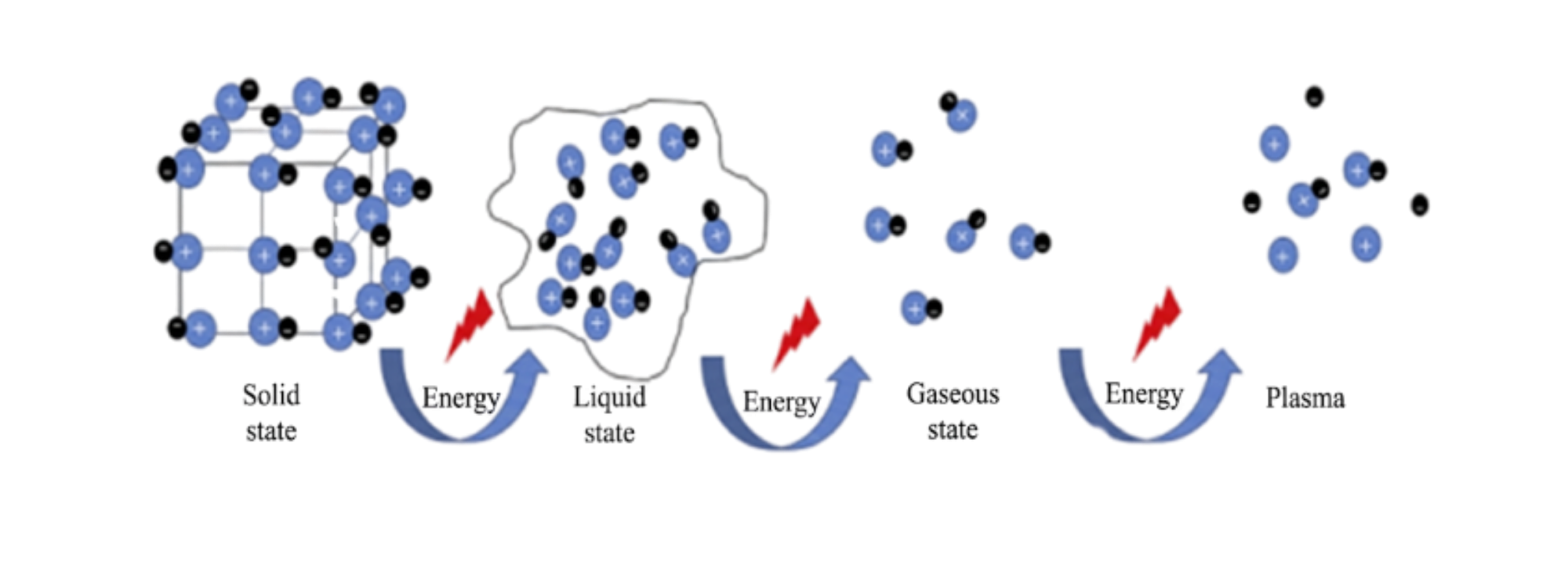
Solid ->Liquid ->Gas -> Plasma
Cold Plasma – partially ionized gas-energy carried mainly by free electrons.
Cold plasma is well-suited for CBRN decontamination
It can be excited at normal atmospheric pressure inside a reactor, allowing aerosol application of working substances.
Piezoelectric
incandescent discharge
Corona
high-voltage point discharge
DBD
Dielectric Barrier Discharge
DCSBD
Diffuse Coplanar Surface DBD
DISCHARGE EFFICIENCY SCHEMA


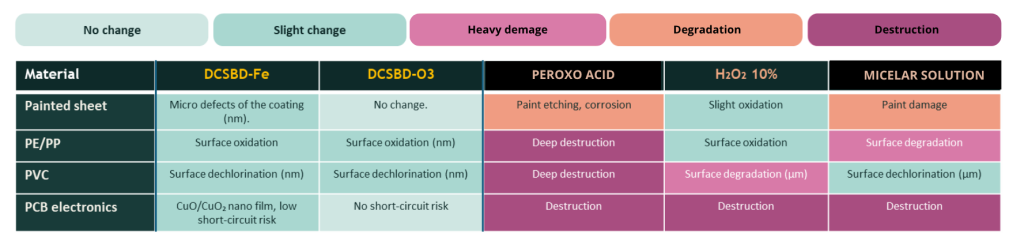
MATERIAL RESPONSE AT STANDARD EXPOSURE: DCSBD VS. CONVENTIONAL.
WHY DCSBD PLASMA DECONTAMINATION
PLASMATIQ VS. CONVENTIONAL (WET) DECONTAMINATION
Compact & Fast
Quick deployment regardless of location and terrain.
Faster reaction
Significantly shorter reaction and total decontamination time.
Less liquid
≈ 5 ml / m² instead of 300 ml / m².
Frost – ready
Deployable in frost.
No need to heat water.
No rinse, no waste
Simple logistics.
One device and solution for the entire risk spectrum.
No corrosion
Siutable for electronics and other sensitive surfaces.
Reaches everywhere
Surfaces and volumes – including porous strukture, gaps and shadowed areas.
PLASMATIQ VS. CURRENT PLASMA DECONTAMINATION (PIEZO / CORONA)
Stronger discharge
Multiple stronger discharge in the DCSBD reactor – faster and more effective response.
Broader chemistry
Ferrous and ozone instead of peroxide – also enables detoxification and deactivation, not just disinfections.
No corrosion
No subsequent corrosion – also suitable for electronics and sensitive surfaces.
WAYS TO USE PLASMATIQ DECONTAMINATION
Handheld & Portable
Stationary decontamination modules – personnel and small surfaces.
Mobile stations
Manned or unmanned vehicles (UxV) for area decontamination.
Robotic arms
Manual and robotic arms for heavy equipment and complex shapes.
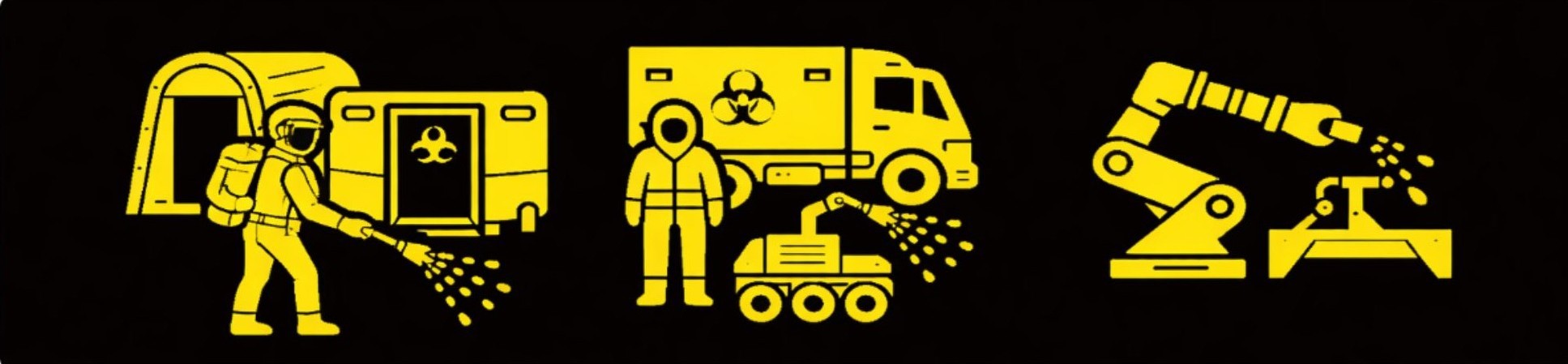
DCSBD plasma reactor combined with active working substances – a modern way to decontaminate personnel and equipment across the entire risk spectrum.

Biological

Chemical

Radiological